




Abstract
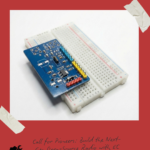
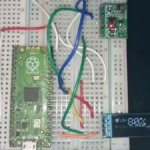
This project details the design and development of a Si4732/Si4735 based radio receiver utilizing a Raspberry Pi Pico for control and a custom-designed PCB. The system features a dedicated power supply circuit, a front panel with dual 0.96 inch OLED displays, SPI display headers, five input switches, and a rotary encoder. The hardware is divided into three separate boards for easy troubleshooting and includes a 3.5mm audio jack output and onboard I2S expansion ports. The front-end user interface is driven by the Raspberry Pi Pico. This open-source hardware project, named SiRadioSeriesBorde, is designed for direct replacement and easy upgrade of Si series radio cards, with a pin configuration that replaces ESP32. Attribution is required.
Introduction
The SiRadioSeriesBorde project aims to create a versatile and user-friendly radio receiver based on the Si4732 and Si4735 radio receiver chips. This project builds upon the successful development of a first-version Si4732 breakout board and expands its capabilities with a custom PCB design. The system leverages the Raspberry Pi Pico for its control and processing capabilities, offering a compact and efficient solution. The hardware design emphasizes modularity, with separate boards for the main radio circuitry, power supply, and front-panel UI, facilitating easy troubleshooting and upgrades. Key features include a dedicated power supply circuit for stable operation, a user-friendly front panel with dual OLED displays for clear information display, and a rotary encoder and input switches for intuitive control. The project is fully open-source, promoting collaboration and further development within the community.
SiSeriesRadio on GitHub

📻 SiSeriesRadio
Open‑Source Si4732 / Si4735 Radio Receiver with Raspberry Pi Pico
OSHW License MCU RF Status
GitHub Stars GitHub Forks Issues
🔍 Project Overview
SiSeriesRadio is a modular, open‑source radio receiver platform based on Silicon Labs Si4732 / Si4735 RF receiver ICs and controlled by a Raspberry Pi Pico. The project is designed for experimenters, radio enthusiasts, embedded developers, and educational use.
Version 2.0 introduces a three‑board architecture with a dedicated Pico‑based front‑end UI, improved power handling, and easy radio‑card replacement — moving away from earlier ESP32‑based designs.
✨ Key Features
- AM / FM / SW reception (chip‑dependent)
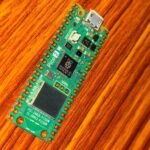
- Raspberry Pi Pico front‑end controller
- Dual 0.96” OLED displays
- Rotary encoder + 5 tactile buttons
- 3.5 mm analog audio output
- I²C radio control interface
- I²S digital audio expansion headers
- Modular 3‑board hardware design
- Fully open‑source hardware (OSHW)
🧩 System Architecture
┌───────────────────────────┐
│ Front‑End UI Board │
│ (Raspberry Pi Pico) │
│ │
│ • OLED Displays │
│ • Buttons & Encoder │
│ • UI Logic │
└─────────────┬─────────────┘
│ I²C / GPIO
┌─────────────▼─────────────┐
│ Interconnect Board │
│ │
│ • Power Distribution │
│ • Signal Routing │
└─────────────┬─────────────┘
│ RF Control
┌─────────────▼─────────────┐
│ Radio Card │
│ (Si4732 / Si4735) │
│ │
│ • RF Front End │
│ • Audio Output │
└───────────────────────────┘
🧠 Board Descriptions
1️⃣ Radio Card (Si4732 / Si4735)
| Signal | Description |
| SDA | I²C Data |
| SCL | I²C Clock |
| RST | Radio Reset |
| GPO1 | Interrupt / Status |
| AUDIO_L | Analog Audio Left |
| AUDIO_R | Analog Audio Right |
| VCC | 3.3 V Supply |
| GND | Ground |
2️⃣ Front‑End UI Board (Raspberry Pi Pico)
| Pico Pin | Function |
| GP0 / GP1 | I²C (Si47xx) |
| GP2–GP6 | Button Inputs |
| GP7 / GP8 | Rotary Encoder |
| GP9 | Radio Reset |
| SPI0 | OLED Displays |
| VSYS | Power Input |
3️⃣ Interconnect / Power Board
- Centralized power routing
- Board‑to‑board connectors
- External power input (5 V)
- Optional onboard regulation
🧰 Repository Structure
RadioCard/
FrontEndUIBoard/
InterconnectPowerBoard/
GerberFiles/
BOM/
Docs/
Firmware/ (WIP)
🚧 Firmware Status
Firmware for the Raspberry Pi Pico is under active development.
Planned features: – I²C radio control – Band switching & scanning – Preset memory – OLED UI menus – I²S audio streaming (future)
🚀 Getting Started
- Review schematics
- Order PCBs using Gerbers
- Source components from BOM
- Assemble boards
- Interconnect modules
- Flash Pico firmware (when released)
🪪 License
Attribution Required License
You may use, modify, and manufacture this design with proper credit to ecmastermind.
🔗 Links
- GitHub: https://github.com/SREERAJSVT/SiSeriesRadio
- OSHWLab: https://oshwlab.com/appusrtv2016/si473x
- Website: https://ecmastermind.com
- Email: team@ecmastermind.com
Introducing SiSeriesRadio – A Modular Open‑Source RF Receiver Platform
The SiSeriesRadio project was born from a simple goal: build a clean, modular, and fully open‑source radio receiver that hobbyists and engineers can understand, modify, and extend.
At its heart lies Silicon Labs’ powerful Si4732 / Si4735 RF receiver IC, paired with the Raspberry Pi Pico, giving developers a familiar, flexible MCU environment.
Why Modular?
Instead of a single monolithic PCB, SiSeriesRadio uses three independent boards:
- A dedicated RF Radio Card
- A user‑friendly Front‑End UI board
- A robust Interconnect & Power board
This allows quick upgrades, easier troubleshooting, and experimentation without redesigning the entire system.
Designed for Learning and Expansion
- Clear signal separation between RF, UI, and power
- Accessible pin headers
- Support for both analog and digital audio paths
- Open schematics for study and modification
What’s Next?
- Stable Pico firmware release
- Preset management and scanning
- I²S digital audio streaming
- Optional PC and web‑based control interfaces
SiSeriesRadio is not just a radio — it’s a learning platform for RF and embedded systems.
If you enjoy radios, hardware hacking, or open‑source electronics, this project is for you.
Build it. Modify it. Share it.

